


Easter and its customs
Easter has its roots in the pagan spring festival. People celebrated the increasing light of spring, the return of fertility, the awakening of nature and new beginnings. Around this symbolism, rituals gathered that have been carried on into the present day. Ostara, a Germanic goddess of spring who was worshipped in spring, is often mentioned in connection with Easter.
Together with Christmas, Easter is one of the biggest celebrations of the year. However, Easter has one major difference to Christmas. While Christmas always falls on the same day, the Easter weekend follows the moon.
Easter is not just a time to celebrate and dine with family and friends, it also includes various Easter traditions. The customs not only consist of treats such as Easter roast, chocolate eggs or chocolate bunnies, but also have a variety of Easter customs to discover. Depending on religion, tradition and origin, there are countless customs that could not be more different.

The Easter Bunny:
The symbol of Easter today is the Easter bunny. He is the Easter messenger who delivers the Easter eggs as a reward for the children who have been particularly good and hard-working.

Colouring Easter eggs:
Colouring and painting Easter eggs is the most widespread Easter custom. The egg has been a symbol of new life and fertility for thousands of years. fertility. Until the 20th century, eggs were mainly dyed in the colour red - the colour of life and fertility. Today, we love to dye eggs in different colours and use them for a varied decoration at Easter.
Easter egg hunt:
The custom of the egg hunt was first mentioned in writing in the 17th century and children still have great fun with it today. However, the custom of bringing eggs existed even earlier, before that it was mainly birds that brought joy to the children. However, there are several theories about the origin of both the egg hunt and the bringing of eggs.
The Easter fire:
The custom of the Easter bonfire has both a Christian and a pagan background. In Austria, the Easter bonfire is sometimes lit on Holy Saturday, Easter Sunday or even Easter Monday. According to Christian belief, the Easter bonfire symbolises the resurrection of Jesus. According to pagan custom, the Easter fire drives away winter and the ashes of the fire are scattered over the fields. The Easter bonfire is therefore also a fertility ritual.
The Easter candle:
The Easter candle symbolises life and is found in Roman, Jewish, Greek and Christian traditions. The candle is lit at the Easter bonfire on the night from Holy Saturday to Easter Sunday. Easter candles are usually only lit in churches.

The Easter lamb:
The Easter lamb has a long tradition in the Christian faith and symbolises innocence. Today, we mainly encounter the Easter lamb in cake form. It doesn't necessarily have to be an Easter lamb in cake form, the baking fairies among you can conjure up anything.
What Easter traditions do you and your loved ones practise?
We wish you happy holidays and a wonderful celebration.
To sweeten the festive season, here is a delicious Easter lamb recipe for you:
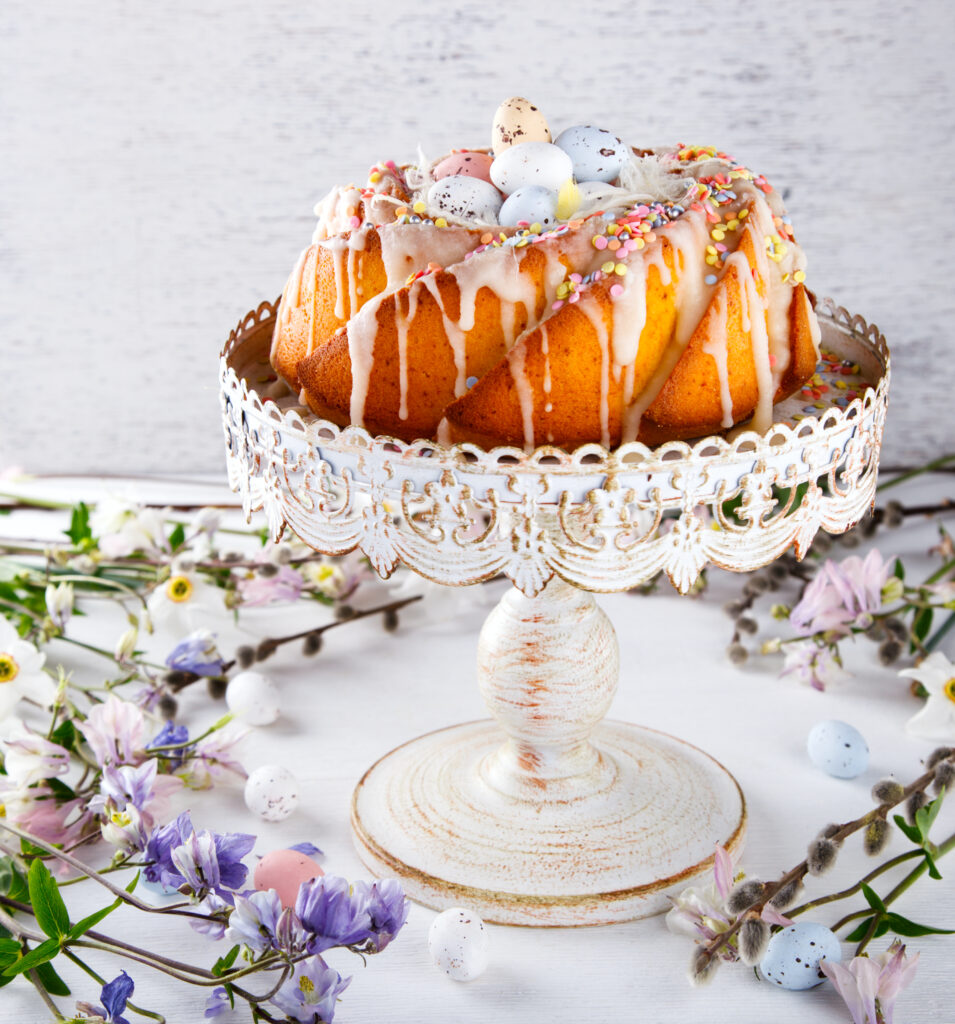
Ingredients:
- 4 eggs
- 120g sugar
- 120g butter room temperature
- Pinch of salt
- Zest of one organic lemon
- real vanilla
- 140g wheat flour
- (80g ground almonds)
- 1 tsp baking powder
- Butter and flour for the baking tin
- Icing sugar for sprinkling
Preparation:
For the baked Easter lamb recipe First grease the lamb baking tin well with butter and dust with flour. Preheat the oven to 160° top/bottom heat. For the sponge mixture, beat the eggs, sugar, butter, salt, vanilla and grated lemon zest with a mixer until frothy. Mix the flour with the baking powder (and ground almonds if necessary) and carefully fold in at the end.
The Lamb baking tin fill with the mixture and tap on the work surface so that the dough is well distributed and no air holes remain. Bake in the preheated oven for around 40-50 minutes at the lowest level. The Easter lamb Leave to cool slightly in the tin and then leave to cool on a wire rack.
Before serving, you can flatten the underside with a knife if necessary so that the baked Easter lamb doesn't fall over. Finally, sprinkle with icing sugar and serve to your loved ones at Easter.